


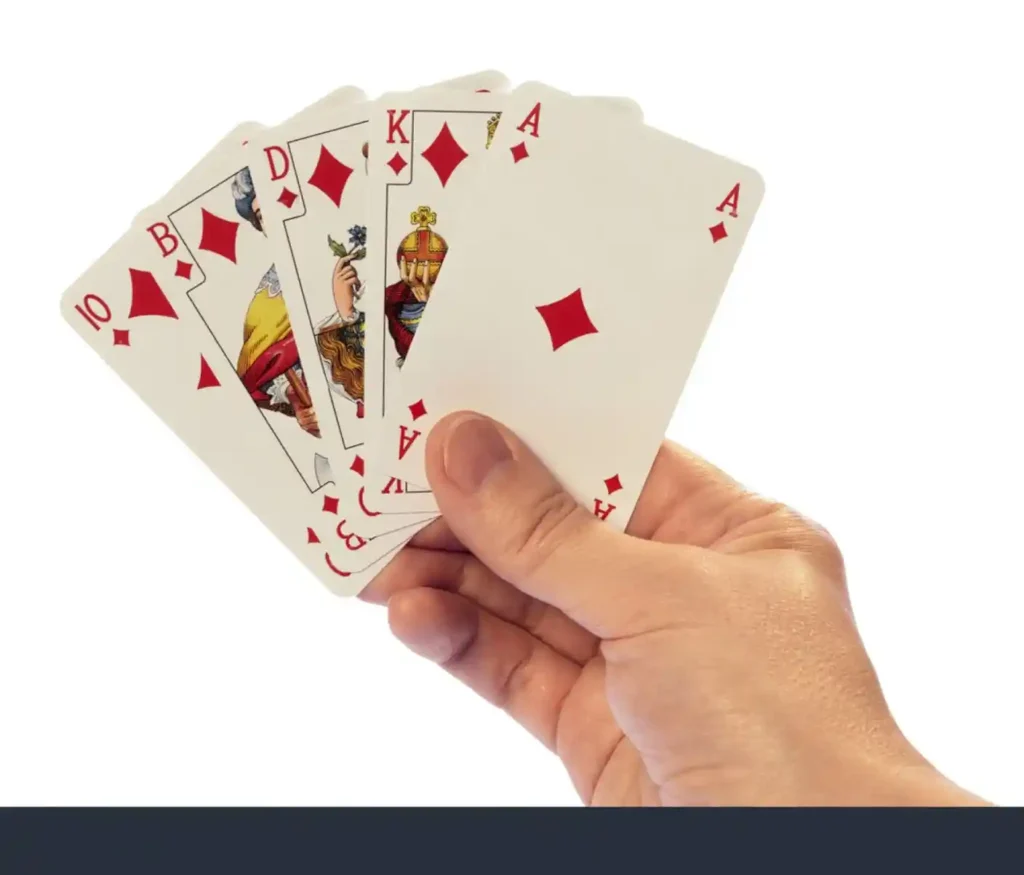
Bridge tournaments are organized events where many players or pairs play the same deals and are scored against each other, so your result depends on how well you played your cards rather than on how good they were. For a casual player, the easiest way in is a short online event: pick a format, play a handful of boards, and study how your results compare with the rest of the field. Within a few sessions you will know far more about your bidding and card play than years of kitchen-table games can tell you.
Bridge is a game you can enjoy casually for decades and still find new layers in. At some point, though, many players want to improve with purpose, test themselves and see real progress. Structured bridge tournaments are the most reliable way to do that, and online platforms have made them far easier to join than they used to be.
How Tournament Bridge Differs from Casual Play
In a home game, the deal is random and the luck of the cards often decides who wins. Tournament bridge is usually played as duplicate bridge: the same deals, called boards, are played at many tables, and you are compared only with other players who held exactly the same cards. If everyone in your seat bid to the same contract, the result is a tie, no matter how many points you scored. If you found an extra trick or avoided a bad contract, you gain.
That shift changes what you learn. A strong hand no longer guarantees a good score, and a weak hand can still produce a top result if you defend well. You start to learn from every board, not just the ones you win.
Scoring methods you will see
| Scoring method | How it works | What it rewards |
|---|---|---|
| Matchpoints | Your score on each board is compared with every other pair in your direction; you earn points for each pair you beat | Small edges, such as an overtrick or the higher-scoring strain |
| IMPs (International Match Points) | The difference between your score and a comparison score is converted on a scale | Making or defeating games and slams; safety over overtricks |
| Total points | Raw scores added up across the event | Big swings; used less often in modern events |
Knowing which scoring is in use helps you make better decisions. At matchpoints, playing in no-trump instead of a major suit for 10 extra points can matter. At IMPs, it rarely does, and protecting your contract is the priority.
Why Tournaments Help You Improve
Casual bridge is social, flexible and fun, but it gives you very little feedback. There is no scoreboard, no comparison group and no way to tell whether a decision was good or just lucky. Tournaments give your play structure:
- Standardized boards across the whole field
- Direct comparisons with other players who held the same cards
- Immediate scores and results after each session
- Hand records you can review afterward to see what others bid and played
- A record of results that shows whether you are improving over time
The review step is where most of the learning happens. After a session, pick the three boards where you scored worst and ask what the top-scoring pairs did differently. Was it the opening lead, the final contract, or a play decision at trick two? Patterns usually appear quickly.
Common Barriers, and How Online Play Removes Them
Traditionally, tournament play came with a few roadblocks:
- You needed a regular partner
- You had to travel to a club or event venue
- You had to set aside several hours at a time
- Entry rules, fees and etiquette could feel intimidating to newcomers
Online platforms have lowered most of these barriers. Bridge Champ is built to make tournament play accessible to everyone, with no special credentials and no need to be known in the bridge community. You sign up, choose a format that suits your schedule, and play. If you are new to the platform, our walkthrough on how to play bridge online in a tournament setting covers getting started.
Tournament Formats to Try
The format you choose should match the time you have and what you want to practice.
Short matches
Short events of around 6 to 8 boards typically run in under an hour. They suit players with limited time and are a good way to practice specific skills, such as opening leads or competitive bidding, under light pressure.
Individual games
No partner? Individual events rotate partners each round, so you can enter on your own. They are a good test of standard bidding, because you cannot rely on private agreements with a regular partner, and they are a friendly way to meet other players.
Pairs events
Pairs games are the classic duplicate format. You play with one partner throughout and are usually scored at matchpoints. They reward accurate bidding and careful play on every board.
Team events
Teams of four, often scored at IMPs, compare your table’s result with your teammates’ result at the other table. Team games emphasize bidding and making games and slams, and they are a good next step once you are comfortable in pairs.
How to Prepare for Your First Bridge Tournament
- Agree on a simple system. If you play with a partner, settle on a widely used approach such as Standard American or 2/1 Game Force and a few basic conventions like Stayman, transfers and Blackwood. Fewer, well-understood agreements beat a long list you both half-remember.
- Fill in a convention card. It forces you to discuss what your bids mean and lets opponents see your methods, which is expected in organized play.
- Learn the alerting rules. Many events require you to alert bids with an unusual meaning. Online platforms usually handle this with a click and a short explanation.
- Start with a short event. A sub-one-hour session lets you get used to the pace and interface without fatigue setting in.
- Plan for review time. Set aside 20 minutes after each session to go through the hand records.
Etiquette and Good Habits at the Table
Bridge has a strong culture of courtesy, and good habits make online and in-person play more enjoyable for everyone:
- Play at a steady pace so the event runs on time.
- Avoid commenting on a partner’s mistakes during the session; save discussion for afterward.
- Do not use hesitations or remarks to signal information to your partner.
- Explain your agreements honestly when opponents ask.
- Thank opponents and partners at the end of the round.
Common Mistakes Newcomers Make
- Overcomplicating the system: adding conventions before you can use the basics reliably leads to costly misunderstandings.
- Ignoring the scoring: making the same choice at matchpoints and IMPs costs points in at least one of them.
- Playing too fast: pausing to plan at trick one is the single cheapest improvement most players can make.
- Not reviewing results: playing many sessions without studying them slows your progress.
- Judging yourself on one session: results swing; look at your average over several events.
Bottom Line
Moving from casual player to confident competitor does not require a big leap. Start with short online events, learn how duplicate scoring works, keep your system simple, and review a few boards after every session. Online tournaments remove the old barriers of travel, fixed partners and long sessions, so the main thing left is to sign up and play.
Frequently Asked Questions
What is duplicate bridge?
Duplicate bridge is the standard tournament format, in which the same deals are played at multiple tables. Each result is compared only with others who held the same cards, which reduces the role of luck and rewards skill.
Do I need a partner to play in a bridge tournament?
Not always. Individual events rotate partners every round, so you can enter alone. Pairs and team events need a partner or teammates, though many clubs and online platforms help players find one.
How long does an online bridge tournament take?
It depends on the format. Short events of around 6 to 8 boards usually finish in under an hour, while longer pairs or team events can take a couple of hours or more.
What is the difference between matchpoints and IMPs?
Matchpoints compare your score on each board with every other result in your direction, so small gains like overtricks matter. IMPs convert score differences on a scale, which places more weight on making games and slams and avoiding big losses.
Am I good enough to play in a tournament?
If you know the rules and basic bidding, yes. Many events welcome players of all levels, and short online games are a low-pressure way to start and measure your progress over time.